
Meet the Youngest Female Doctor in the World
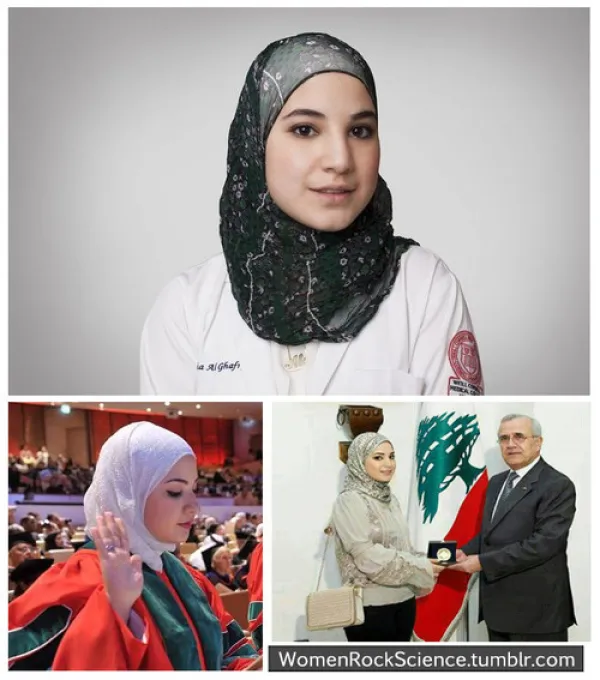
At just 13, Iqbal Al-Assaad began her journey into medicine at Weill Cornell Medicine–Qatar. Her extraordinary academic achievement took her from Lebanon’s Bekaa Valley to the world stage, where she became recognized as one of the youngest doctors in the world.
Iqbal El-Assaad is a Palestinian refugee from Lebanon whose extraordinary academic journey took her from the Bekaa Valley to becoming a physician specializing in pediatric electrophysiology in the United States.
Her story is remarkable not simply because of how young she was when she entered medical school and earned her medical degree, but because of the humanitarian motivation behind her decision to become a doctor.
Iqbal Mahmoud Al-Assaad was born on February 2, 1993, to a Palestinian father and Lebanese mother. Her father's family originated in Mughr al-Khayt, a village near Safed in Palestine. During the Nakba, her family sought refuge in Lebanon's Bekaa region, where her grandfather and his children worked in agriculture.
Iqbal grew up in the Bekaa Valley and became interested in medicine after witnessing the difficulties Palestinian refugees faced in obtaining healthcare. Visits to refugee camps exposed her to children whose families struggled to afford medical treatment.
She decided at about age 12 that she wanted to become a doctor. In an interview with Nature Middle East, she explained that seeing the suffering of Palestinians in Lebanon and the lack of access to healthcare strongly influenced her decision.
Her academic achievements were extraordinary. Her teachers recognized early that she was far ahead of her classmates, and she skipped several grades. She completed primary and secondary education years ahead of the usual schedule and finished high school at age 12.
At 13, she began pre-medical studies at Weill Cornell Medical College in Qatar. She received a scholarship from Sheikha Mozah, consort of the Emir of Qatar, and continued her studies at Weill Cornell.
In 2013, at age 20, Iqbal graduated with a medical degree. At the time, she was the youngest person ever to graduate from Weill Cornell Medicine–Qatar.
Some accounts have described her as the world's youngest female doctor. That description should be distinguished from the Guinness World Records title for the world's youngest doctor. According to Wikipedia, Balamurali Krishna "Bala" Ambati entered the Guinness Book of World Records after becoming a physician at 17 years and 294 days.
Regardless of how the record is defined, Iqbal's accomplishment was extraordinary. She became widely known as one of the youngest Arab women to earn a medical degree and was recognized for her academic achievements.
Her motivation, however, extended far beyond academic recognition.
Iqbal wanted to specialize in pediatrics because of her experiences with children in Palestinian refugee communities. She hoped eventually to return to the Middle East and use her medical training to help people who had limited access to healthcare.
That ambition presented a difficult challenge. Palestinian refugees in Lebanon have historically faced significant restrictions on employment, including restrictions affecting certain professions regulated by professional syndicates. Medicine is among the professions affected by these restrictions.
This created a painful irony in Iqbal's story: she had worked exceptionally hard to become a physician partly because she wanted to serve her community, yet returning to Lebanon to practice medicine was not necessarily straightforward.
Instead, her medical career continued in the United States.
Iqbal completed her pediatrics residency at Cleveland Clinic Children's Hospital in Ohio. She later trained at Boston Children's Hospital, the principal pediatric teaching hospital of Harvard Medical School, completing fellowships in pediatric cardiology and electrophysiology.
Her advanced training focused on heart-rhythm disorders, including procedures such as catheter ablation and device implantation.
Today, Iqbal is an attending physician in Pediatric Electrophysiology at Cleveland Clinic Children's. Her specialty involves caring for children and adults with congenital heart disease and heart-rhythm disorders.
Her career has also included clinical research, teaching and academic recognition. Her professional biography lists research and teaching awards, including recognition from organizations such as the Children's Hospital of Philadelphia and the American Society of Echocardiography. She has also received recognition for her research and academic accomplishments.
Her journey is especially meaningful when viewed against the circumstances of her childhood. The girl who saw children struggling to receive medical care in Lebanon grew into a physician whose specialty allows her to care for children with complex heart conditions.
According to UNRWA, the United Nations agency supporting Palestine refugees, approximately 248,000 Palestine refugees and their family members live in 12 refugee camps in Lebanon. For communities facing longstanding economic and healthcare challenges, physicians with Iqbal's background can represent an important connection between personal experience and professional service.
Iqbal El-Assaad's story is ultimately about much more than becoming a doctor at a remarkably young age. It is a story of determination, education and a desire to help children and families who have experienced barriers to healthcare.
Her accomplishments have brought pride to her family and have also made her an inspiring figure for Palestinians and Arab communities around the world.
Most importantly, her journey demonstrates how a difficult childhood experience can become the motivation for a lifelong commitment to medicine and helping others.
UNRWA provides education and health services to an estimated 248,000 Palestine refugees and their families across Lebanon.
Nearly half—about 45%—are estimated to live in the country’s 12 refugee camps. Photo credit: unrwa.org
Mahmoud El-Yousseph is a Palestinian freelance writer and retired U.S. Air Force veteran. He writes about U.S. foreign policy, Middle Eastern affairs and justice.